Cerys Hafana WLS + Mika Akim SE
Welsh harp and folk-pop om viola d’amoreThe Welsh harp boasts not just one, but three rows of strings. With their fingers on them and their beautiful singing voice, Cerys Hafana interprets the rich traditions of Welsh folk music, making it entirely their own. That same evening, you can experience Mika Akim’s beautiful folk-pop on the Baroque instrument, the viola d’amore.
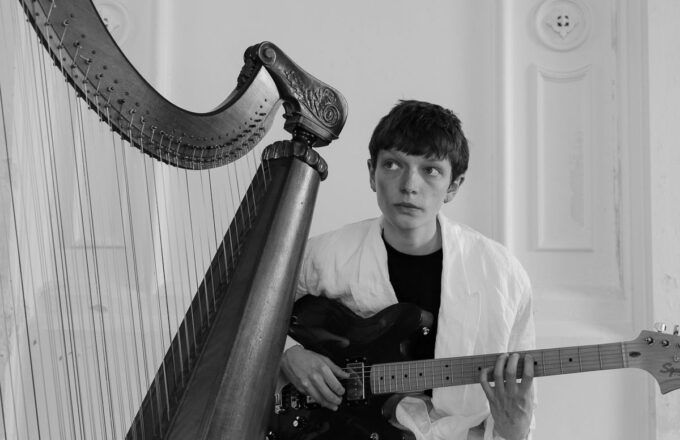
Mika Akim
Swedish violist Mika Persdotter moves fluidly between classical music, composition, improvisation, and songwriting. Under the artist name (and palindrome) Mika Akim, she has created a universe where the viola d’amore – a bowed instrument primarily associated with Baroque music – walks hand in hand with her delicate vocals.
Mika Akim’s music is a love letter to the Baroque instrument, to the body, to the voice, and to beautiful and strange sounds alike. With lyrics in both Swedish and English, Mika Akim crafts a minimalist and poetic world that has drawn comparisons to artists such as Joni Mitchell, Sam Amidon, and José González. Since the project began in 2020, Mika Akim has released two albums: Till Kroppen in 2020 and Tillsammans in 2022. She has performed concerts in Denmark, Sweden, the Czech Republic, France, Germany, Japan, the USA, and Chile.
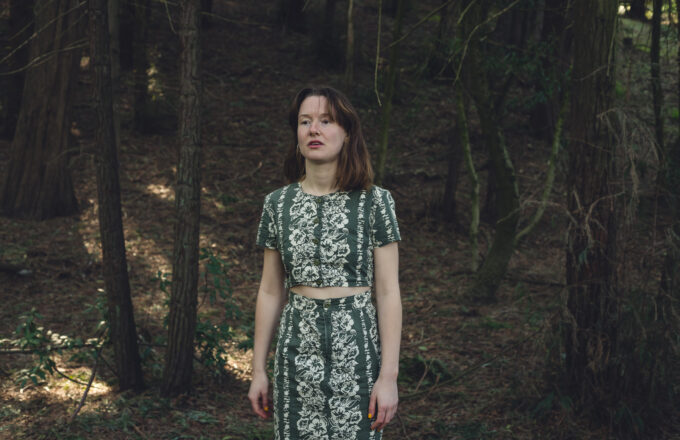
Cerys Hafana
“My definition of folk music: music that can, and will, be changed,” Cerys Hafana told The Guardian. As a Welsh folk musician, they engage with their homeland’s musical traditions through melodies, songs, and instruments handed down through generations without changing. But the story of Welsh folk music, according to Cerys Hafana, might as well be told the opposite way: “As a story of change, of new influences and ideas being brought in by people from other places, and a story of new struggles and challenges that will inevitably enact changes over the centuries.” One example is the instrument they themselves play: Wales’ national instrument, the triple harp, which arrived in London in the 17th century – from Italy.
With their fingers on the Welsh harp’s three rows of strings, they mangle, mutate and transform traditional Welsh music into a hypnotic soundscape. Cerys Hafana released their debut album Cwmwl in 2020. The follow-up, Edyf, made The Guardian’s list of the year’s best folk albums. Since then, they have released several EPs, performed at multiple international festivals, and opened for artists such as Charlie Cunningham, Adwaith, Andrew Wasylyk, and Yann Tiersen. We look forward to experiencing the ever-evolving Welsh folk music in the company of Cerys Hafana!
Doors at: 20:00
Concert at: 21:00
Standard: 215 DKK
Youth under 25 / Student: 195 DKK
StandingBuy ticketfrom 195 DKK